
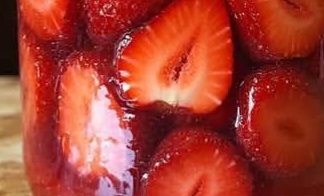
Here is your full, polished Canning Strawberries recipe profile with all requested sections — clean, organized, and without any wide line separators:
Canning Strawberries
Introduction
Canning strawberries is a timeless preservation method that captures the fruit’s peak sweetness and vibrant color, allowing you to enjoy summer flavors year-round. Whether used for desserts, breakfasts, or baking, canned strawberries offer both convenience and homemade freshness.
Origin
Fruit preservation by canning dates back to the early 19th century, following Nicolas Appert’s breakthrough in airtight food storage. Strawberries quickly became a favorite due to their short harvest season and popularity in European and American kitchens.
Cultural Significance
Across generations, canning strawberries has been part of family traditions, communal harvest days, and rural homesteading. Many cultures pair preserved strawberries with breads, pancakes, and festive desserts, symbolizing hospitality and homemade generosity.
Ingredients Quantity
For 4–5 pints of canned strawberries:
- 3–4 lbs fresh strawberries, hulled
- 1–1½ cups sugar (adjust to taste)
- 3 cups water
- 1 tbsp lemon juice (optional, for brightness)
- Sterilized jars, lids, and rings
Optional Additions
- 1–2 tsp vanilla extract
- Lemon or orange zest
- 1–2 cinnamon sticks (added to the syrup)
- A splash of balsamic vinegar for depth
- Fresh mint leaves (added after canning when serving)
Tips for Success
- Choose firm, ripe strawberries—overripe fruit becomes mushy.
- Sterilize all jars and lids to ensure safe canning.
- Avoid excessive sugar; use just enough to form a light syrup.
- Pack strawberries gently to avoid crushing.
- Remove air bubbles before sealing to prevent uneven storage.
- Follow precise water-bath processing times for safety.
Instructions
- Prepare the Strawberries:
Wash and hull strawberries. Leave small ones whole; halve larger ones. - Make the Syrup:
Combine water and sugar in a pot. Heat until sugar dissolves and mixture simmers. Add lemon juice if using. - Heat the Strawberries (Optional):
You may warm them slightly in the syrup for better jar packing, but it’s optional. - Pack the Jars:
Fill sterilized jars with strawberries, leaving ½-inch headspace. Pour hot syrup over them. - Remove Air Bubbles:
Run a clean utensil around the inside of the jar. Adjust syrup as needed. - Seal the Jars:
Wipe rims clean. Add lids and rings. - Process:
Place jars in a boiling water bath for 10 minutes (adjust for altitude if needed). - Cool and Store:
Let jars rest undisturbed 12–24 hours. Store in a cool, dark pantry for up to 1 year.
Description
Canned strawberries emerge soft, sweet, and ruby red, resting in a glossy syrup that smells like warm summer fields. Their flavor is richer and more concentrated than fresh berries, making them perfect for spooning over pancakes, yogurt, ice cream, or pastries.
Nutritional Information (Per ½ Cup)
- Calories: ~110
- Carbohydrates: 26 g
- Sugars: 22 g
- Fiber: 2 g
- Vitamin C: 60% DV
- Fat: 0 g
- Protein: 1 g
(Values vary depending on sugar content and serving size.)
Conclusion
Canning strawberries is an accessible and rewarding kitchen project that preserves one of nature’s most delightful fruits. Its versatility makes it useful for everyday meals, baking, and gifting.
Recommendation
Use your canned strawberries for toppings, fillings, smoothies, jam-making shortcuts, or even as a base for strawberry lemonade. Pair them with creamy or warm baked dishes for maximum enjoyment.
Embracing Healthful Indulgence
This recipe allows you to enjoy a naturally sweet treat without excessive sugar or additives. By controlling ingredients and using seasonal produce, you create a wholesome indulgence that supports balanced, joyful eating year-round.
If you want, I can also format it into a printable recipe card, a social-media-ready post, or a Pinterest-optimized layout!